Day 1: Bangalore to tadipatri
Day 2: Stay in tadipatri. Visit belum caves, ravvalakonda, acchamamba house, yaganti, Nandyala, Mahanandi
Day 3: Ahobilam (7- temples) and back to tadipatri- Buggaramalingeswara swami temple and chintala venkateswara swamy temple. Tadipatri to Bangalore. If you can plan for another day you can cover the other 2 temples of Ahobilam and Gandikota. As we did not have time so we could not cover them.
Day 4: reach Bangalore early in the morning
Day 0: It was as usually a hectic day at office. We stay at HAL old airport road. We have the bus to catch at hebbal that night. It was a long weekend and city is as usual busy with traffic. We reached hebbal by 9:30 and we have the bus to be boarded by 10:10. We were to catch the APSRTC bus which was as-usually late and reached hebbal by 11:00. Once we got on to the bus we dozed off. We reached Tadipatri the next day by 5:00 AM.
Day1: Tadipatri or Tadpatri is a town in Anantapur district of the Indian state of Andhra Pradesh. It is the mandal headquarters of Tadipatri mandal in Anantapur revenue division.[2] It is located at the border of Kurnool district and Kadapa district. You do not have many options for hotels. We got an auto outside the bus stop we started searching for the hotel room. We just need some place to freshen up. So at last we luckily found one place to stay.
We freshen up quickly and went to the centre of the town where the hotel owner said we could find a cab. So we found a nice cab driver Mr. Malli who helped us plan our trip and made us tour the places comfortably.
The first stop we went was to belum caves. We reached belum caves by 8:30 in the morning. We could see that the caves open only by 10:00 AM and close by 5:30 PM. The entry fee for the Caves was 60 Rs per adult and 30 per child. There is an ample parking space to park the car. Guides are available who can take you through the places and can explain you about the history of the same.
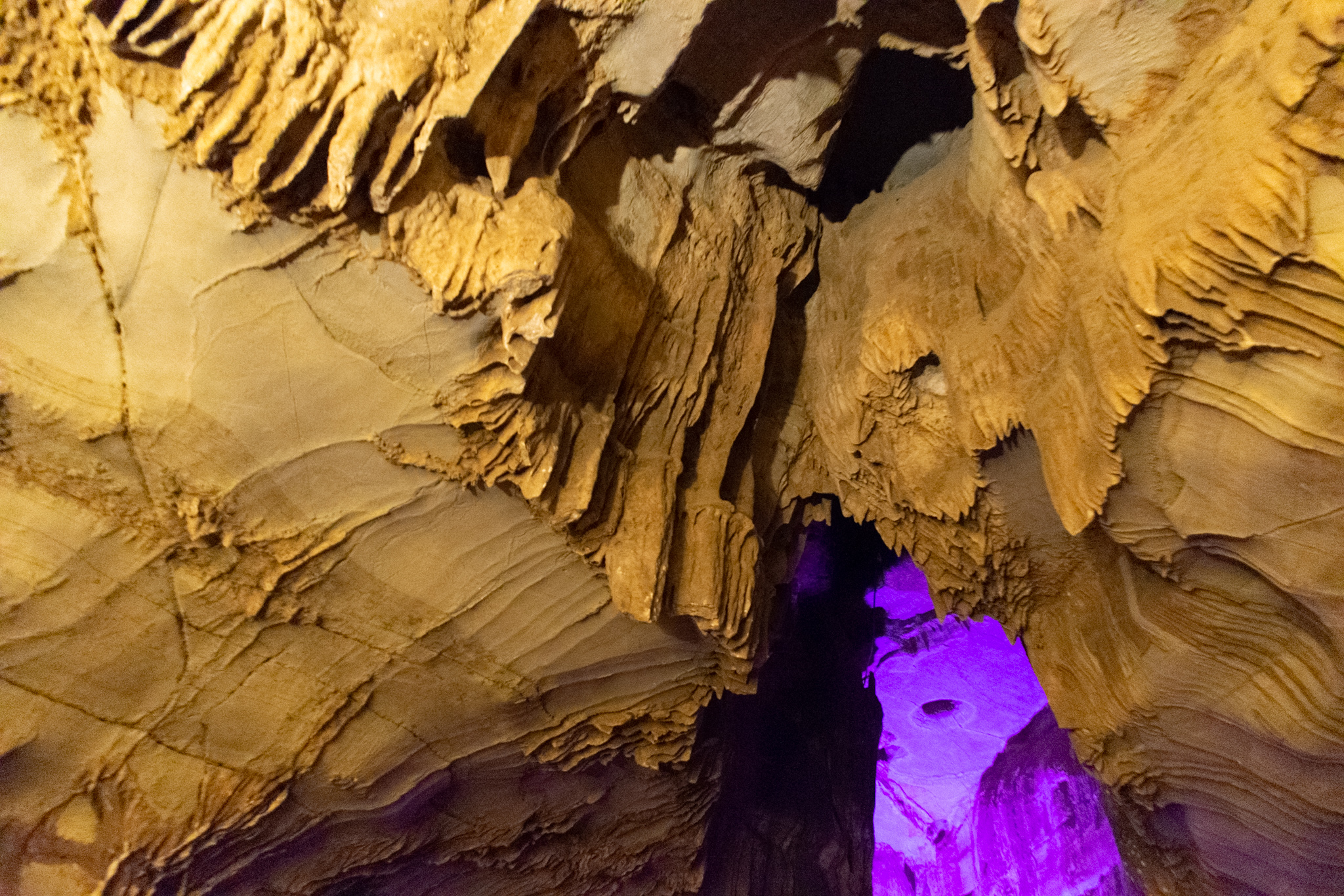
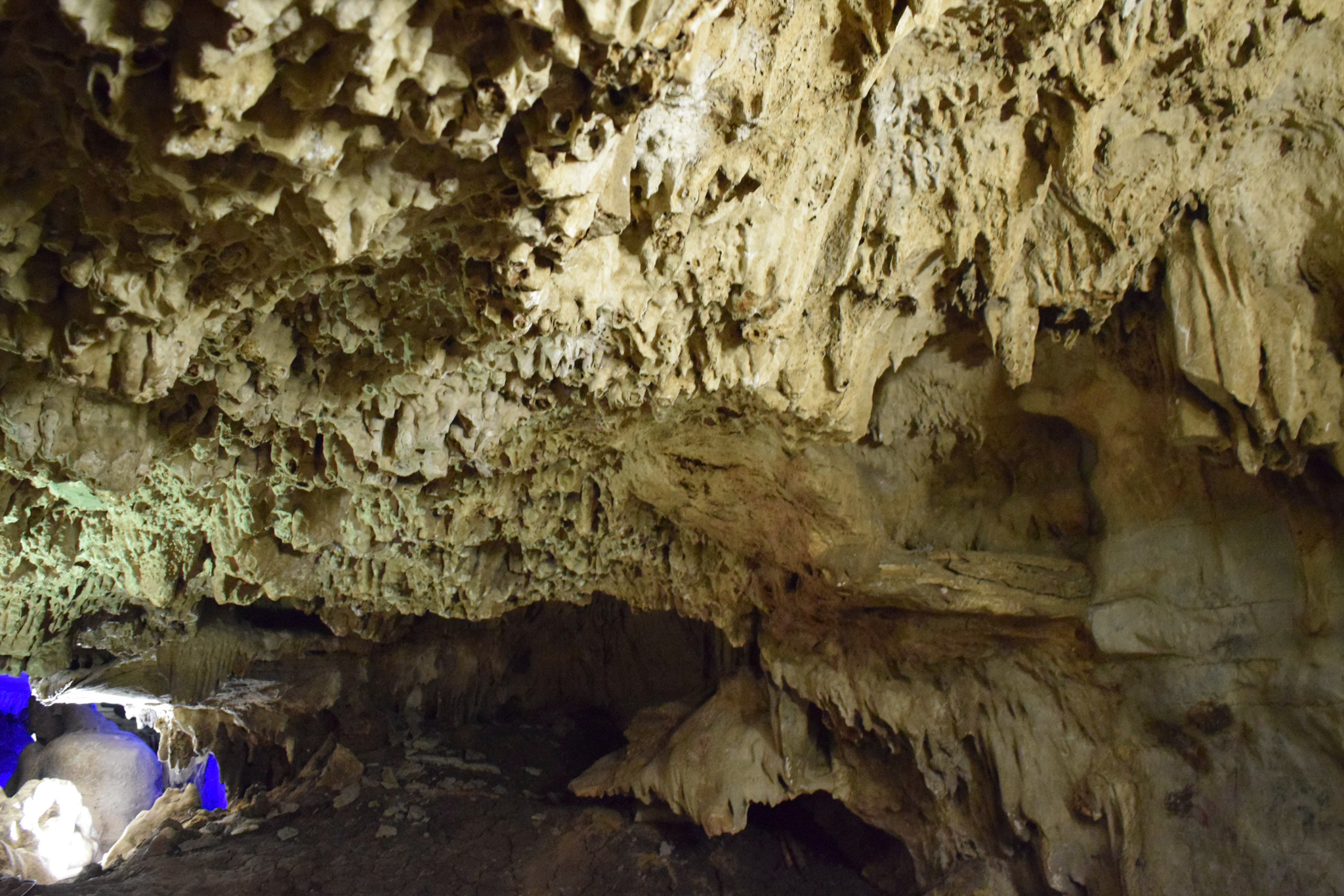
Belum Caves are the longest caves system in the plains of Indian Subcontinent and the second largest cave system open to the visitors on Indian subcontinent. The caves are known for its Speleothem, stalactite and stalagmite formations. It is a natural underground cave formed by the flow of river which is now dried up. The length of the caves is around 3.5 KM.
Belum Caves were first discovered by British in 1884. A team of German geologist conducted a detailed exploration of the caves in 1982 to 84. The evidences of ancient civilization are found in these caves that have eventually helped in making the place one of the prime spots of historical importance and tourist attraction. It is believed that these caves have been served as natural habitat of pre-historic man.
Very good lighting arrangement and air circulation were made inside the cave but good to carry a torch light (if you hire a guide they will have it for tourist). The caves reach its deepest point up to 150 feet under the ground; air circulation is tough naturally, so there are air blowers that will help easy breathing inside the caves. It has long passages, fresh water galleries, spacious chambers and siphons.
Next stop: Acchamamba house
It is around 20 KM from Belum caves. It is a place where Brahmam garu had lived.
Next stop: Ravvala konda:
It is around 40KM from belum caves and we need to take a diversion from the main highway in order to each the Ravaalakonda – Brahmam gari Matham. It is said that potuluri veera brahmendra swamy had written the “kalagnanam” here in these hills. There is a big Banyan tree under which there is a small path which goes deep inside. There are pathways under the Banyan tree, they say there are way from Ravvalakonda to Yaganti, Srisailam which are closed as of now.
Yaganti:
This temple was constructed by King Harihara Bukka Raya of the Sangama Dynasty of the Vijayanagara Empire in the 15th century.
The sage Agastya wanted to build a temple for Lord Venkateswara on this site. However, the statue that was made could not be installed as the toe nail of the idol got broken. The sage was upset over this and performed a penance for Shiva. When Shiva appeared, he said the place suits Shiva better as it resembles Kailash. Agastya then requested Shiva to give the devotees a Parvathi Goddess as Lord Uma Maheswara in a single stone, which Shiva obliged.
There are mainly 4 temples in this place
- The main deity the Shiva temple. The Nandi in this shire is said to be growing year on year.
- The Agastya cave. Where Agastya muni have stayed. It can be reached by climbing around 120 steps.
- The lord venkateswara temple : The damaged idol of venkateswara is present in this cave.
- This is the cave where saint Sree Potuluri Veera Brahmendra swamy wrote some of his Kala Gnaanam (prophecy). The height of the cave is less and one needs to bend half over to enter it.
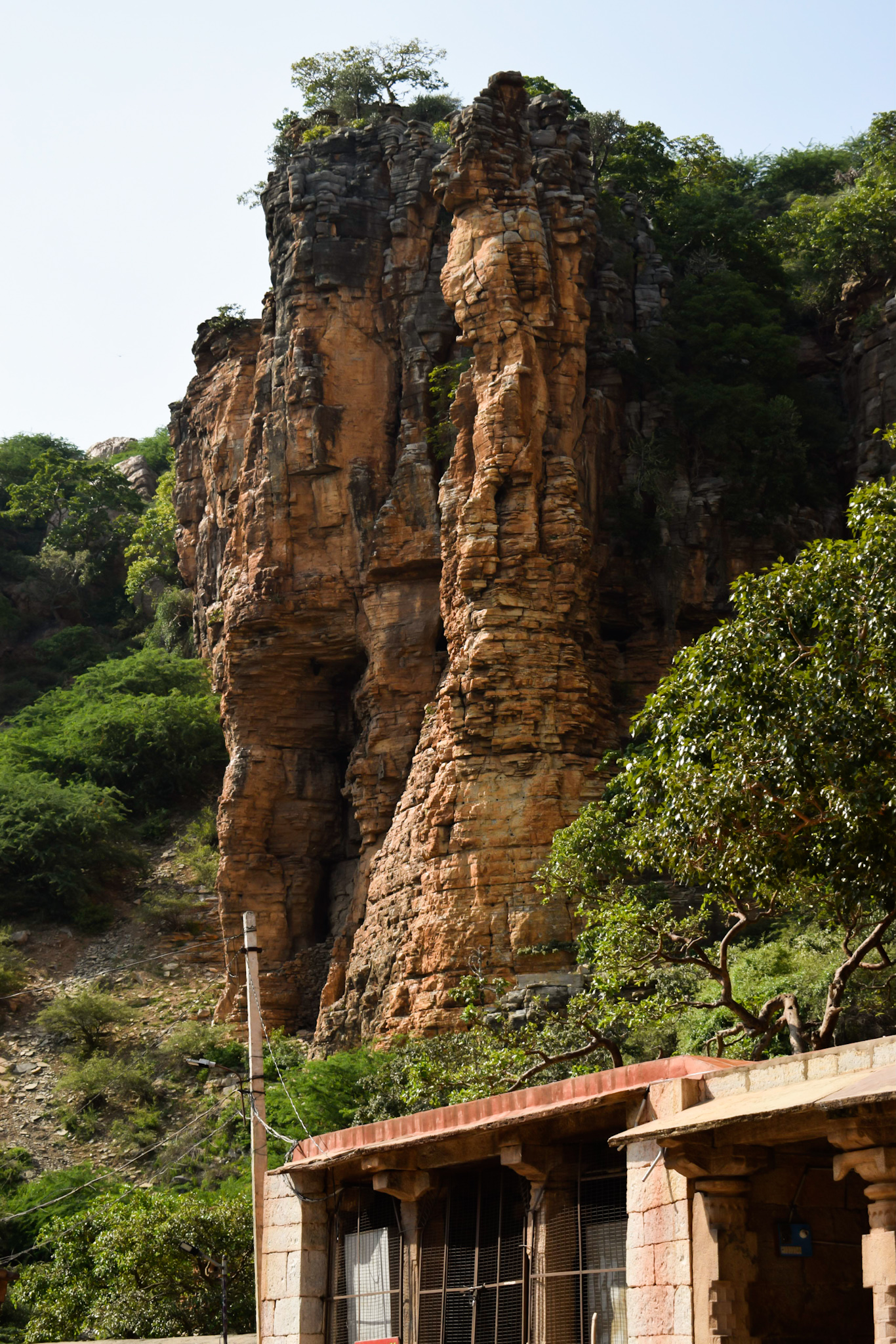
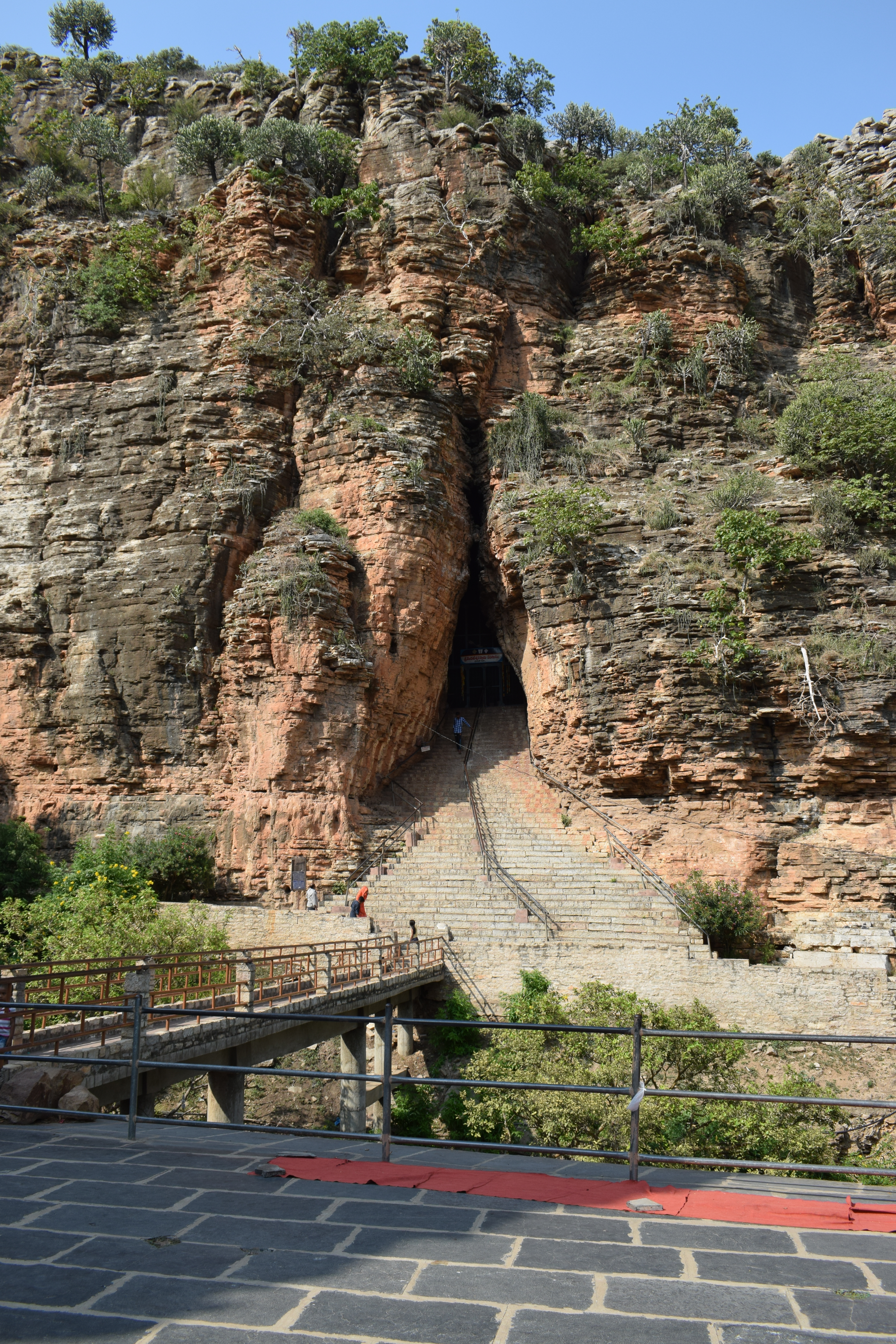
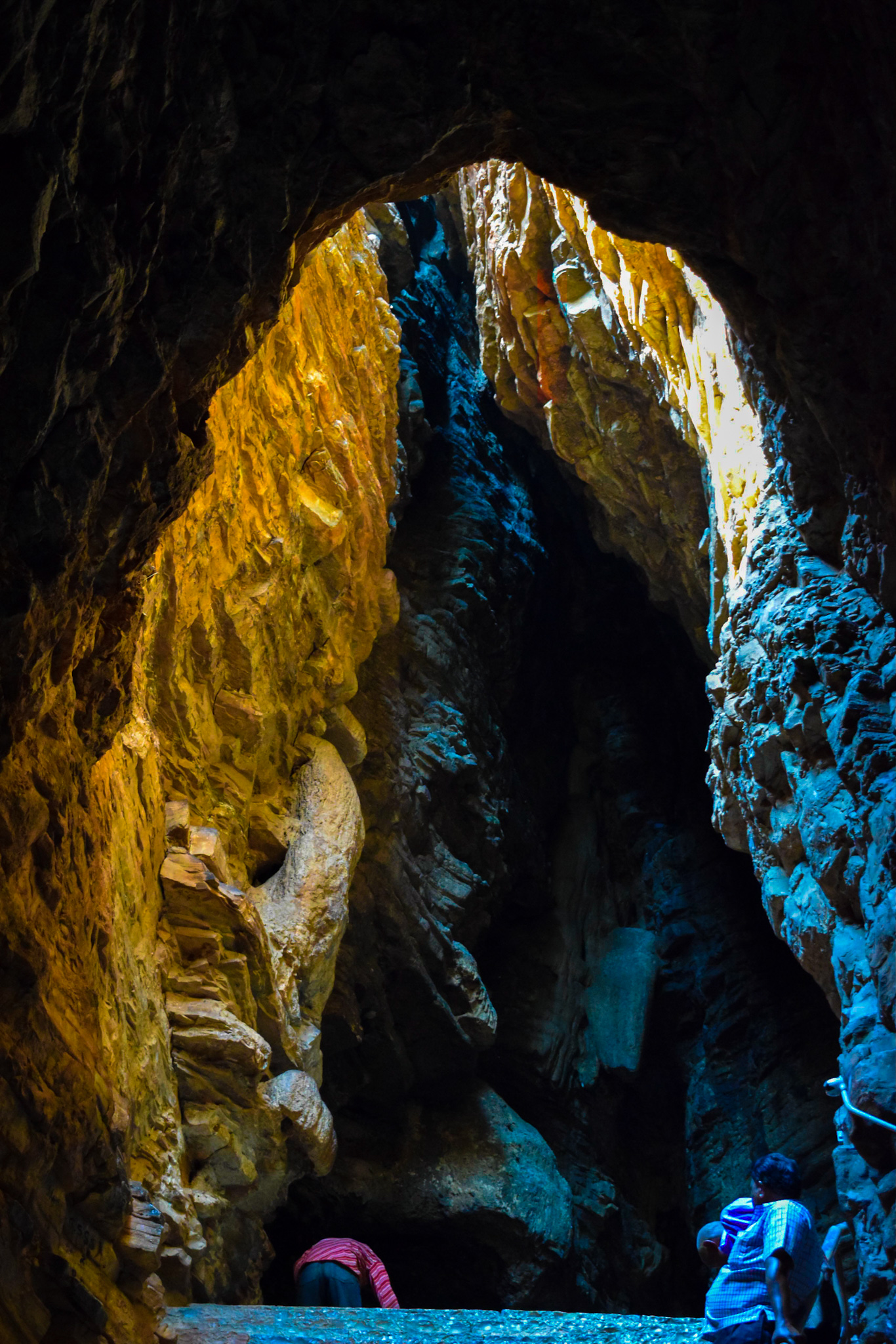
After visiting yaganti we reached Nandyala by evening 6:00. We checked in to the hotel got freshen up and started for Mahanandi which is around 20KM from Nandyala.
Mahanandi:
Mahanandi, is a village located east of the Nallamala Hills near Nandyal, Kurnool District, Andhra Pradesh, India. It is surrounded by forests. Within 15 km of Mahanandi, there are nine Nandi shrines known as Nava nandulu. Mahanandi is one of the Nava Nandis. The Mahanandiswara Swamy Temple, an important shrine, is located here. This ancient temple dates back over 1,500 years. The inscriptions of 10th century tablets speak of the temple being repaired and rebuilt several times.
These nine temples are Mahanandi, Shivanandi, Vinayakanandi, Somanandi, Prathamanandi, Garudanandi, Suryanandi, Krishnanandi (also called Vishnunandi) and Naganandi. But we could not visit all the temples of Mahanandi.
There is a puskarini at Mahanandi where people do swim or take bath. The water looks fresh all the time ( No cell phones allowed inside the temple).
At last it was a very hectic day. The next day is going to be much more hectic as it involves a little bit of walking.
Day 3: The next day early in the morning we started our journey to Ahobilam. It took around 1 hour to reach Ahobilam (70KM). There are 9 temples in Ahobilam and it takes 2 days to cover all the temples.
Upper Ahobilam includes
- Ahobilam Narasimha: The main temple from where you can start the darshan from.
- Kroda Narasimha: (Need to Trek): it is at a distance of 1 km from main temple.
- Jwala Narasimha: (Need to trek): it is at a distance of 4 KM from Kroda Narasimha
- Malola Narasimha: ( Need to trek): it is at a distance of 0.5 to 1 km from Kroda Narasimha
The path from kroda Narasimha to Malola temple is through forest and you have path and steps to some extent.
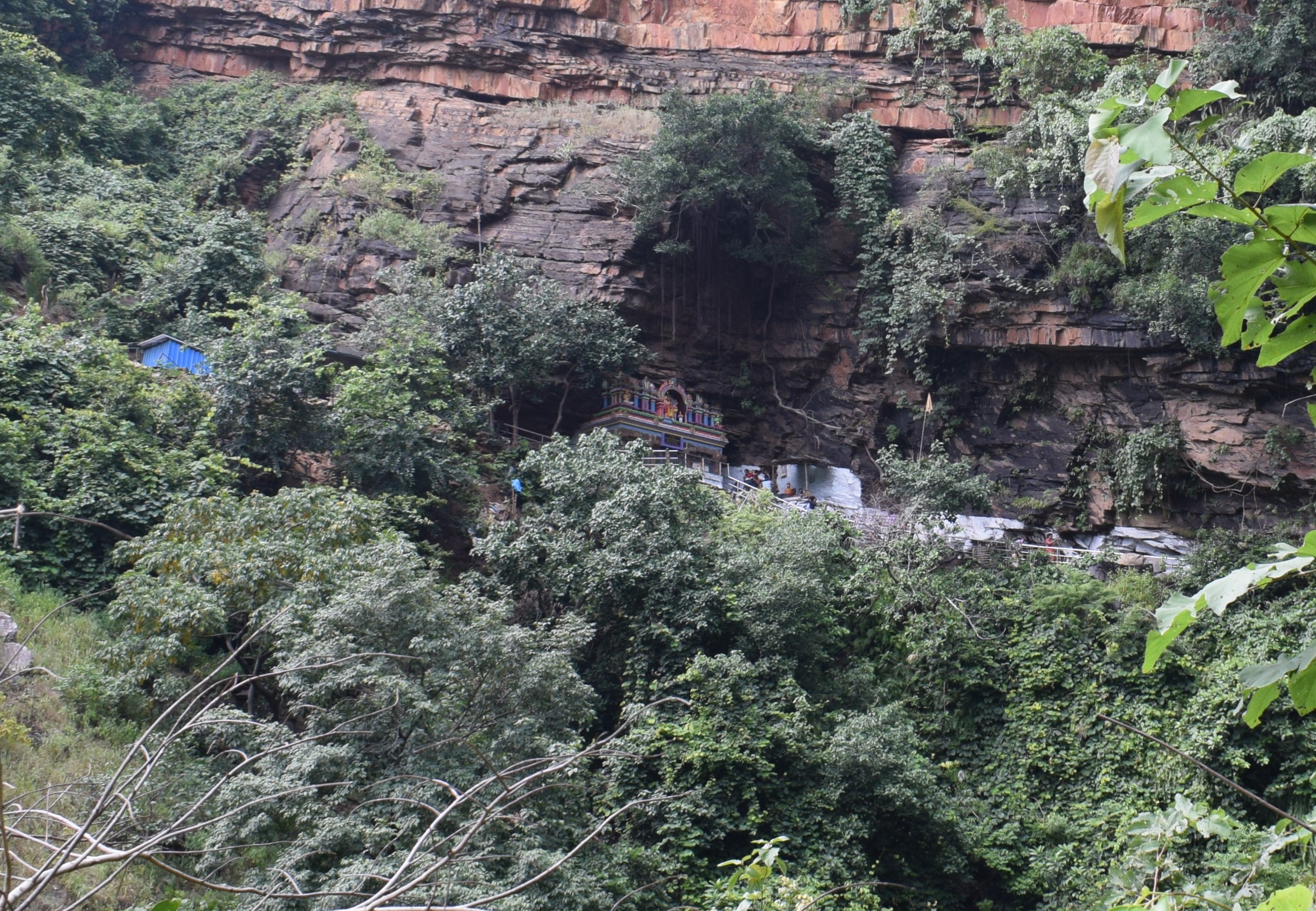
Jwala Narasimha
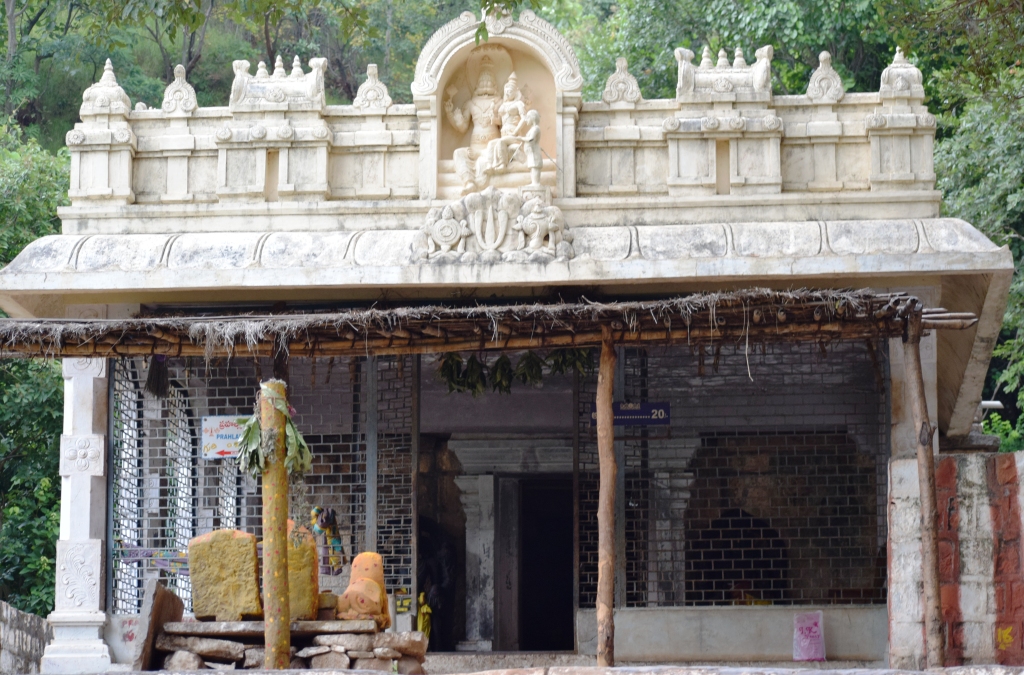
You have guides available at lower ahobilam to take you through the temples. We have not taken any guide by rather saw the man and started our trek. At the start of the trek you have the facility to rent some stick which would be helpful for you while walking and she charges bare minimum of 3/- as rent, so that while returning back the sticks you can pay the amount. All through the way you have a very good scenic beauty as you would be walking through a small steam of water and full of trees and bushes.
Lower Ahobilam Includes
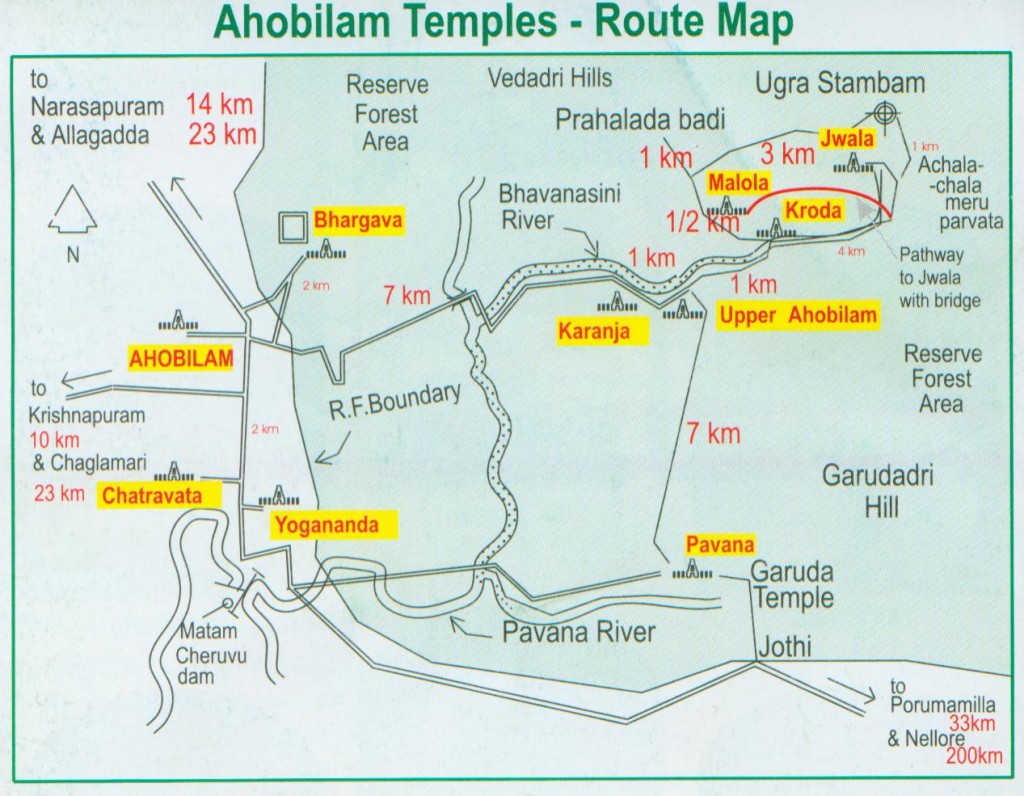
- Yogananda Narasimha:
- Chatravata Narasimha:
- Pavana Narasimha ( can be trekked, Can take a vehicle)
- Bhargava Narasimha:
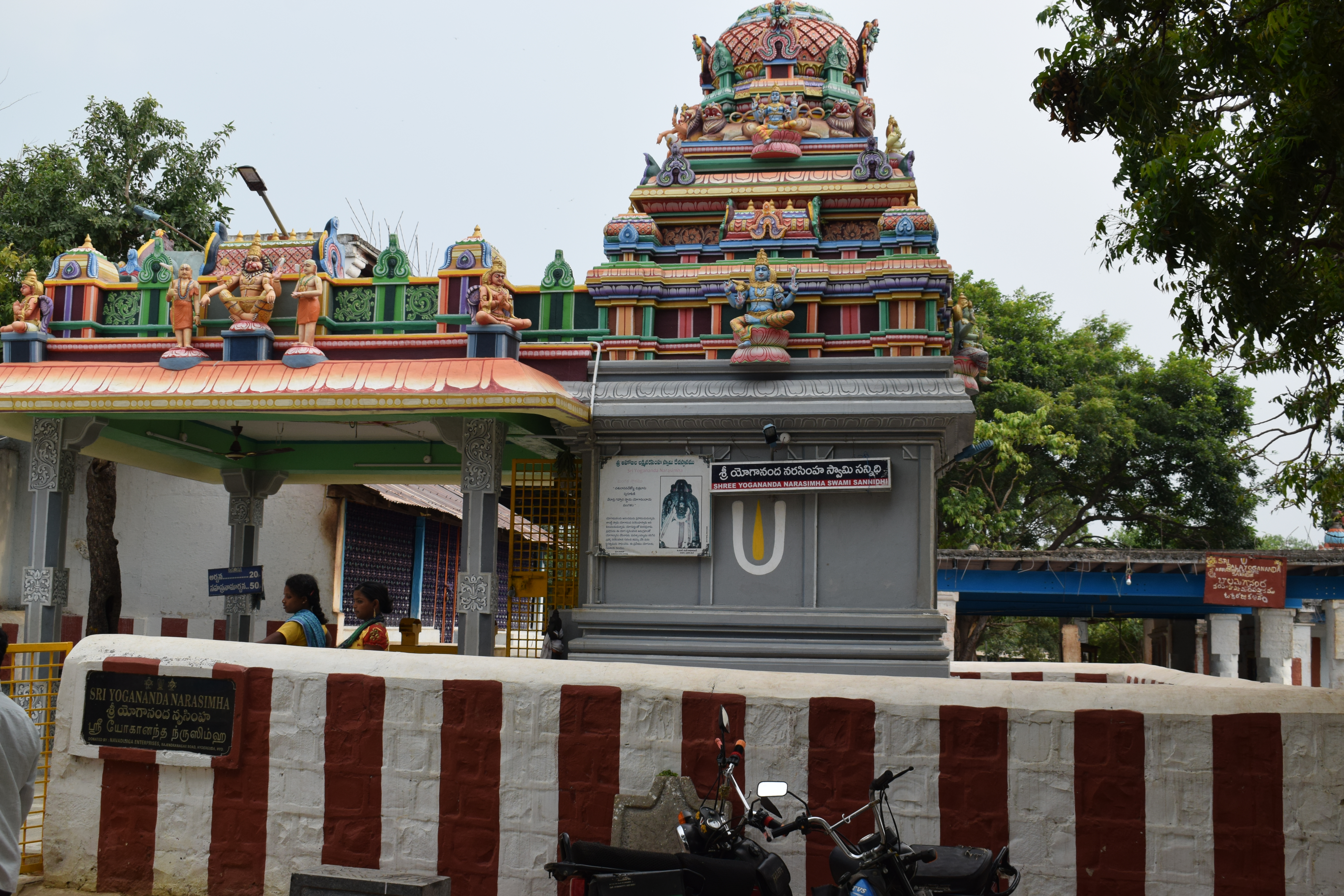
Yogananda Narasimha
In-between Upper and lower Ahobilam you have
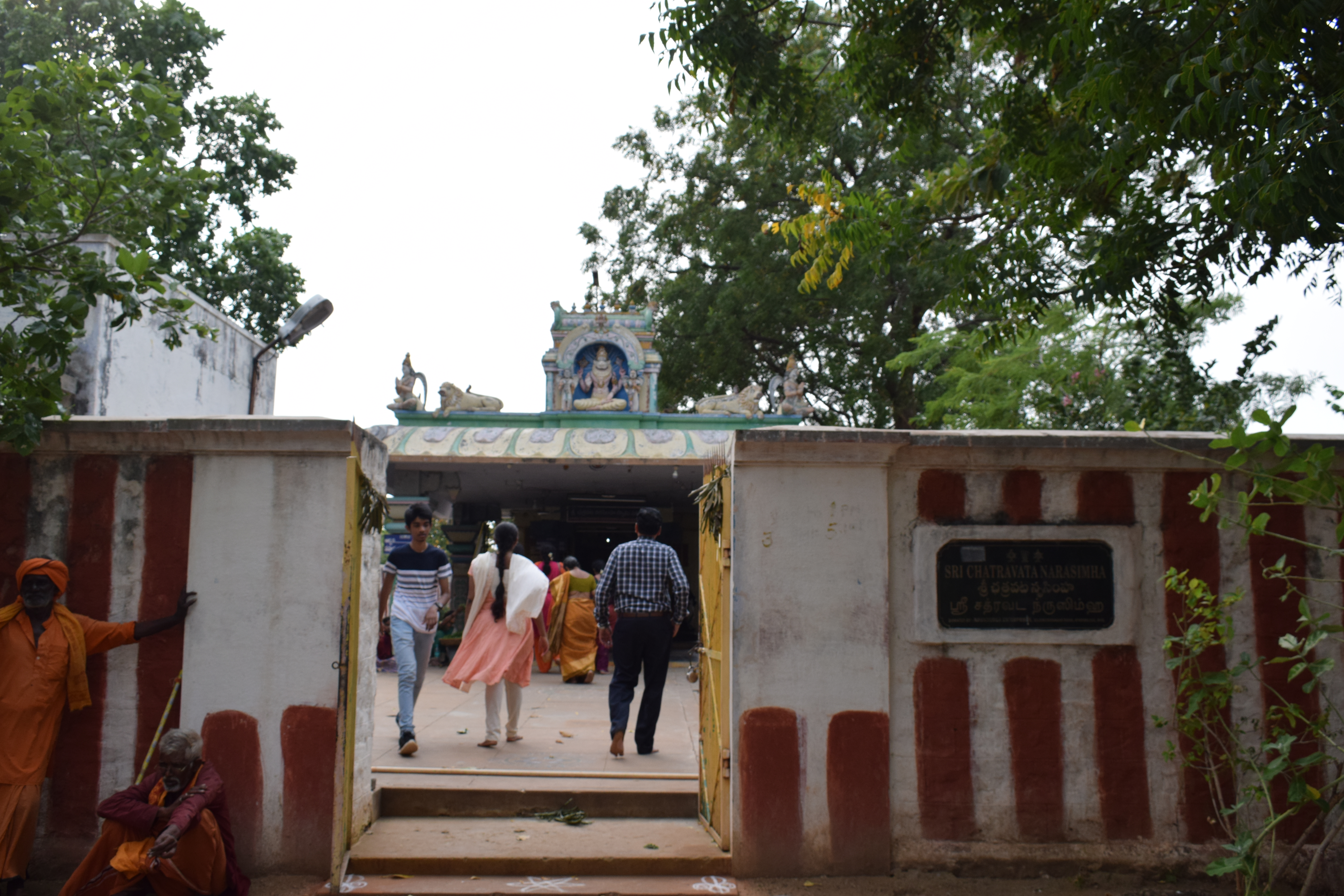
Chatravata Narasimha
- Karanja narasimha : while travelling to lower Ahobilam from upper Ahobilam you would encounter this temple. Can be visited by vehicle.
Apart from these you can visit
- Prahalada badi: The place where Prahlada had learnt his education is at a distance of around 1km from malola Narasimha swamy temple.
- Ugra
Stambham:
At a distance of 8km from the Upper Ahobilam temple, we can see a cleft of the mountain dividing it into two visible parts. It is a long-held view that from the cleft, the Lord appeared in the form of Narasimha and this cleft is known as ‘Ugra Sthambham’.
Due to lesser time we could not visit Pavana and Bhargava Narasimha temple. But if you have a day you can cover both the places too.
At lower Ahobilam there are cottages provided by the ahobilam math for the devotees to stay.
Note: No hotels, food is available at upper ahobilam except the annadana satram at the start of the upper ahobilam. Before starting the trek to the temples it is good, if you can go to the annadana satram and get the tickets for your lunch.
After the day we travelled back to tadiparti and got freshened up at the hotel. At last we ended our day by having Jowar Roti which is a very famous and staple food in this area.
We had a bus from tadipatri at 10:00 PM through which we reached Bangalore the next day morning.

 Saint Traveller